 Julia's Blog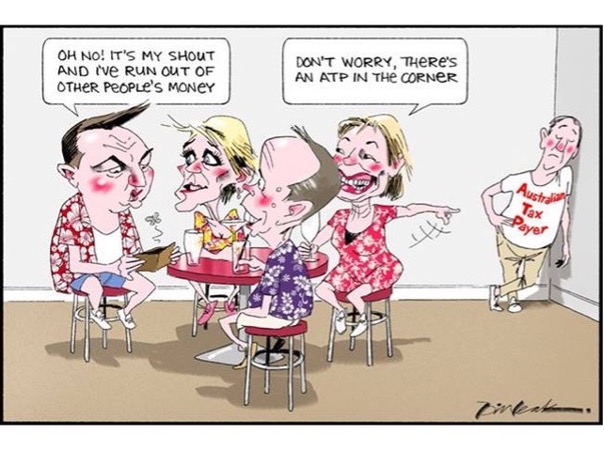
A Death, Divorce and Natural Disasters Tax has been hidden in the budget and it is far further reaching than the widow’s tax on negative gearing that has been getting all the attention. In fact that issue is a non event because the rental property will have to be sold to pay the death tax on the capital gain up to 1-7-2027. Unless you are immortal it is going to get you. Don’t think that if you don’t own shares or a house it won’t affect you, it even taxes wedding rings. Tax payable at date of death. Shouldn’t worry the wealthy that much but the poor will be forced to sell said wedding ring to pay the tax. Nothing is going to slide under the radar. The ATO is going to know you have died.
You will recall that the budget announced that all capital gains up to 30th June 2027 would have the 50% CGT discount protected. The gain is calculated up to that date, but the tax is deferred until a realisation event. Now you would think it simpler to just say until the asset is sold. Why introduce this new term, realisation event? That is where the devil is in the detail. A realisation event bypasses all the rollover protections introduced by Keating to prevent tax arising when the asset had not really been sold. For example, a lump sum paid by an insurance company to rebuild a property and transfers between spouses on divorce. The most diabolical is the rollover on inherited assets, that affects everyone, it is a death tax, due at date of death. There is now no rollover for these gains between the deceased, the estate and then onto the eventual beneficiary. All this deferred capital gain is taxed in the deceased’s date of death tax return. The estate has to pay the tax. The wealthy will have the means to pay the tax but those less fortunate will have to sell the asset, triggering further CGT payable on the post 30th June 2027 capital gain.
In many cases this will apply to the family home. There maybe some CGT exposure because the family did not move in immediately after settlement, it might have been a rental first, the land might be more than 2 hectares, it might have been used partially in a business ie tradies shed. If this affects a young family losing their main income earner, they won’t be able to borrow to pay the tax or to downsize. The family home will have to be sold and a sole parent compete with all other potential renters in an ever decreasing rental market.
This affects assets acquired between 20th September, 1985 and 30th June 2027 by people who die after 30th June, 2027. There is a tax benefit in turning off the life support before that date. This is a new generational inequity, the elderly surviving spouse being force to sell off assets, maybe even the family home, to pay the death tax. Yet for the younger generation, if they buy their assets after 30th June, 2027 they will not have this problem, they will get the rollovers.
There is nothing accidental about this there were simpler more transparent ways of dealing with the pre 2027 gains. In fact the simplest way would have been to just roll back to the law we had before Howard introduced the 50% CGT discount as a method of simplification. When the current government created this realisation event, that triggers a tax on unrealised gains, exceptions were considered and there were a few carve outs for certain CGT events but all the rollover reliefs were left off the list. Further, as the bill passed through parliament the profession alerted the government to the problem and were ignored.
So all we have is more taxes, in particular on houses and I guess it will make them cheaper because it will force widows to sell up. I can’t think of any worse choice of demographic that should bear the brunt of this supposed housing affordability policy. I just don’t get how higher taxes lead to more affordable homes. If that was true then considering the price of a new home includes around 40% in taxes, homes should be as cheap as chips!
It is not just homes, it includes, boats and caravans costing more than $10,000. Jewellery, antiques and paintings costing more than $500. It is not just death also divorce and natural disasters, possibly even insurance pay outs to rebuild, meaning there is not enough left to rebuild.
Life tenancies will become impossible if the home has any CGT exposure. The executor is bound by the will to keep the home for the benefit of the life tenant but the ATO wants tax, where is the money to come from? All basic mum and dad stuff. Won’t bother the wealthy as they will have other funds and not be forced to sell the family home.
Here is how the tax trap works. Under the disguise of preserving the 50% CGT discount on assets acquire before 30th June 2027 the government has introduce a new concept, the deferred capital gain. The gain up to 30th June 2027 is calculated by using the market value at that date but no tax is payable until a “realisation event”. Now if they meant until the asset is sold then that was simple, that is all they needed to say. The government introduced this new term and then pushed through the legislation parliament without consultation or debate. Very intentional, no need for a new term if they really meant when you sell. No need to do a deal with the Greens to push it through without discussion when it got to the Senate and questions were being asked about the affects of death.
The realisation event is a CGT event other than a few exceptions. None of those exceptions include the rollover relief available when assets pass from one spouse to another on divorce or on death. Further, rollovers for small business assets and insurance payouts are not carved out either. All triggering a lot of tax due on date of death when no assets have been sold to provide the cash to pay.
Should you sell up before 1st July, 2027? Probably only assets that are likely to have a capital loss at 30-6-2027 that you may not sell before you die. You see the capital loss at 30th June, 2027 will die with you unless you have other capital gains in your date of death return. This means your estate will not be able to utilise that capital loss when it sells the asset and because of the resetting of the cost base to market value at 30th June 2027 to an amount that is less than you paid for the asset, your estate will have to pay CGT on a greater capital gain then just the difference between the selling price and the original purchase price.
So for example, a young couple buy a block of land in July 2025 hoping to build their first home one day. They pay $500,000 plus various purchasing costs of $20,000. Their cost base is $520,000. Between mowing, rates and interest on the loan it costs them around $30,000 a year to hold. Then the budget hits and as planned by the government the costs of housing falls. This flows through the land prices and when the 1st July, 2027 comes around the land is only worth $450,000. That is their new cost base going forward that can only be indexed if they make a gain.
One member of the couple dies a year after 1st July, 2027 when the property is worth $490,000. No death tax to pay up to 30th June 2027 because there is a capital loss but the survivor cannot afford the repayments so has to sell the property. The property now has a cost base of $450,000 plus interest, rates and indexing since 1st July, 2027 let’s say $485,000.
Half the property in the estate tax return:
| Cost base half market value at 1st July, 2027 | $225,000 |
| Plus half holding costs and indexing for a year | $17,500 |
| Plus half selling costs | $2,000 |
| $244,500 | |
| Half of selling price | $245,000 |
| Taxable gain to be taxed at a rate of at least 30% | $500 |
Getting back to reality for a minute here, this property cost $520,000 to buy, $90,000 to hold and $4,000 to sell. It only sold for $490,000 a loss $124,000 yet tax is payable on the deceased’s share on a smoke and mirrors gain of $500. It is not enough to tax every dollar we earn several times over now we are being taxed on losses dressed up as gains!
Consider a share portfolio you inherited back in 2000 from your parents. They paid $100,000 for the shares, under the old rules you inherited them with that cost base because back then you were entitled to the rollover, no CGT was payable. These shares are your retirement nest egg. They are now worth $1mil and with a little bit of superannuation you retire in early 2026 before the budget and its death tax, thinking you had enough. Time to go back to work because if your spouse outlives you, they are not going to have that $1mil in shares as their retirement savings.
When you die the capital gain from your parent’s purchase price to the market value at 1st July, 2027 will be subject to tax in your final tax return. The gain will be around $900,000 less the 50% CGT discount leaving you $450,000 taxable on top of your other income. Probably around $200,000 in tax. But here is the catch, to pay that $200,000 in tax some shares will have to be sold by the estate. The sale will then raise further CGT on the gain from 1st July, 2027 to the time of sale. This will be taxed in the estates tax return with a minimum tax rate of 30%, no discount but some indexing. It would be fair to assume the death tax on this alone is going to reduce your portfolio by 25%. The longer you live after 1st July, 2027 the higher this percentage is likely to be. Even worse if your home has some exposure to CGT, more shares will need to be sold to prevent the family home being sold to cover the death tax on it. It is a shock to know how little of your assets you really do own!
The 50% CGT discount was introduced as a simplification compared with indexation, a rough rule of thumb that had a similar result. In fact the 50% CGT discount was bad for people with just mediocre gains, indexation would have meant they paid less tax. But no one complained it made things simple. Now the discount has been villainised and used as a diversion to introduce a death tax. We are right back to taxing unrealised gains a hallmark of the Albanese government. Where do they think people are going to get the money from?
Just like the widow’s tax and the tax on testamentary trusts. You can’t say they didn’t realise, that it was a mistake, how do you write a law that specifically catches testamentary trusts and then say oppsie we will correct it? They are trying it on and seeing just how gullible we are. Push back, this whole legislation needs to be removed. The government needs to understand if they don’t remove it, we will remove them, the LNP have already said, elect them and they will remove it.
Personally, I would rather surrender my 50% CGT discount, have indexing for that period instead and be entitled to the rollover relief when needed. Take it back to the days before Howard introduced the 50% CGT discount but don’t do this, forcing families to sell up when one parent dies.